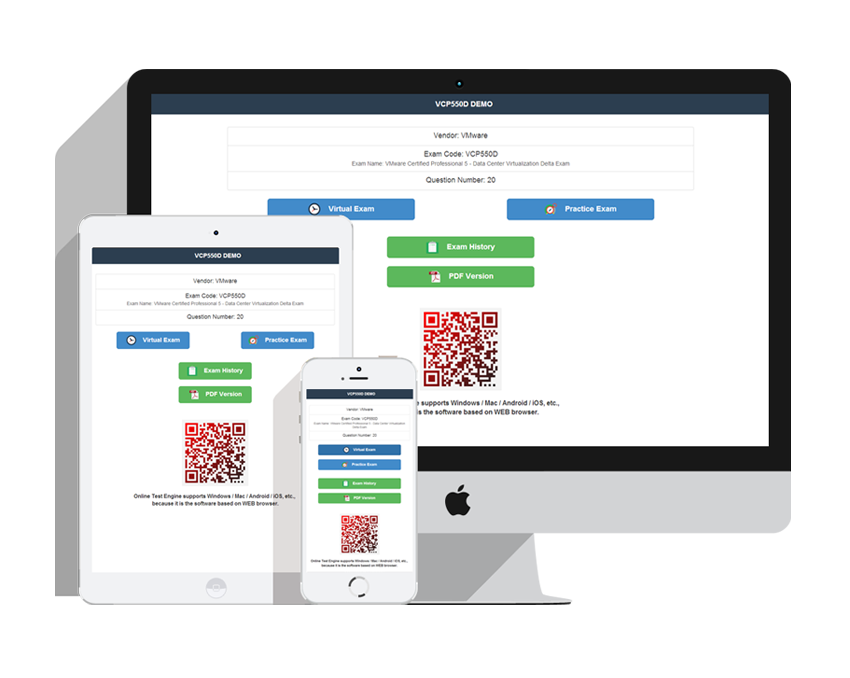
Free Demo


What's the definition of good Microsoft AI-200 latest dumps materials? Well, firstly we need to know that exam materials is to be used by people, so the only standard to measure a product is whether AI-200 exam simulation materials can satisfy people. Our AI-200 practice test questions aim to make our customers have fantastic user experience.

Free experience
Research has it that, the sense of touch can strengthen customer's confidence of his buying. So, to make sure our clients can have the sense of touch before actually buying our products AI-200 latest dumps materials, we offer free tryout items to our guests, so that they can know better about our products AI-200 exam simulation materials before they buy it. And after the payment is done, our customers can have access to APP & PDF version of AI-200 practice test materials that they've purchased and can download PDF & Soft version. The whole process, from tryout to use, is so easy and convenient Microsoft AI-200 latest dumps materials and can benefit both our guests and us as the great experience of our guests is also our pursuit.
After purchase, Instant Download AI-200 Dumps: Upon successful payment, Our systems will automatically send the product you have purchased to your mailbox by email. (If not received within 12 hours, please contact us. Note: don't forget to check your spam.)
Safe payment and client information
As our enterprise value is customer first (AI-200 latest dumps materials), we are willing to try our best to make sure that the safety of our client's information and payments are secured. You can certainly let go of your concerns AI-200 exam simulation materials about your personal privacy and payment safety, as up till now, we've never let out one word to outside world about our customers, because we have strict rules of our information security Microsoft AI-200 practice test materials. Our target is to make sure our customers can concentrate on their study (AI-200 latest dumps) and work without other worries behind.
High efficiency
For each test, you only need to spend 20 to 30 hours in learning and practicing our product Microsoft AI-200 latest dumps materials. If you are really busy and can only spare two hours a day at most in study, you will only need to make sure that you can persist in studying AI-200 exam simulation materials for 10 to 15 days, and that's really a very short time as you are going to have an important test that can bring you a valuable certificate. High efficiency AI-200 practice test materials have inclusive meaning, and the first one to mention is that your time is saved. We all lead a busy life in today's world, and the saying "time is money" is not nonsense but something that is held high by all of us. So why not choose a time-saving way Microsoft AI-200 test questions to reach your target. In addition, high efficiency also refers to high quality, which means your pass rate is secured. We have so many successful examples to demonstrate our products AI-200 VCE dumps, and it's of no exaggeration to say that our pass rate can reach 99%. As we have such a high pass rate, why not become another successful example of us?
Microsoft AI-200 Exam Syllabus Topics:
| Section | Objectives |
|---|---|
| Topic 1: Plan and manage Azure AI solutions | - Plan security and compliance requirements - Monitor and optimize AI solutions - Select appropriate Azure AI services |
| Topic 2: Implement and monitor AI workloads | - Deploy AI models and services - Monitor performance and troubleshoot issues |
| Topic 3: Implement Azure AI solutions | - Implement computer vision solutions - Implement knowledge mining with Azure AI Search - Implement generative AI solutions using Azure OpenAI - Implement natural language processing solutions |
Microsoft Developing AI Cloud Solutions on Azure Sample Questions:
1. Case Study 2 - Proseware Inc.
Background
Proseware Inc. develops AI-powered knowledge management solutions for enterprise customers.
The company is modernizing its platform to support semantic search, intelligent document retrieval, and real-time partner integrations.
The engineering team uses Python and Azure SDKs. The architecture is being redesigned to support containerized microservices, vector search workloads, and serverless backend processing.
Planned Application Architecture
Microservices are containerized by using Docker.
Code for containerized microservices and Azure Function apps is developed locally but stored in a GitHub repository.
Custom images for containerized microservices are stored in Azure Container Registry (ACR).
Base images are stored in Docker Hub. Custom images must be rebuilt automatically whenever their base images are updated.
Azure Cosmos DB for NoSQL stores documents, metadata, and vector embeddings.
Azure Functions generate vector embeddings of Azure Cosmos DB for NoSQL-hosted documents and send messages to Service Bus to trigger search index updates.
Azure Container Apps (ACA) apps host backend API services that provide semantic search across Azure Cosmos DB for NoSQL documents. API services process Service Bus messages and update search indexes.
Azure Kubernetes Service (AKS) processes batch vector embedding regeneration for existing Azure Cosmos DB for NoSQL documents (whenever the embedding model is changed).
An extranet-facing containerized webhook allows business partners to submit documents to be processed by internal AI workflows for semantic search and retrieval.
Monitoring
Telemetry generated by Azure resources is sent to Azure Monitor.
A Log Analytics workspace is used to collect ACA apps logs, AKS container logs, and Azure Functions apps logs.
Monitoring of Azure Functions is currently implemented by using Azure Application Insights SDK instrumentation.
Business Requirements
Embeddings for new or updated Azure Cosmos DB for NoSQL-hosted documents must be automatically generated.
Backend API services must scale automatically during business hours.
Cold start delay of backend APIs must be minimized.
Secrets must be stored outside of container images.
Developers must be able to correlate telemetry across Azure Functions hosts and apps.
All tracing must be implemented by using OpenTelemetry SDK instrumentation.
Development efforts must be minimized.
Technical Requirements
Container images must be built automatically and validated before code updates are merged into the main branch.
Image build automation must run inside the Azure Container Registry, eliminating dependency on local developer machines and external build services.
Dependency of image builds on local developer machines must be eliminated.
Event-driven scaling in ACA must occur based on the number of pending messages in the Azure Service Bus queue.
Azure Cosmos DB for NoSQL RU consumption must be minimized.
Vector similarity search must use embeddings stored in Azure Cosmos DB for NoSQL.
The partner-facing containerized webhook service must run on Azure App Service.
Secrets must NOT be stored in container images, source control, or application configuration directly. They must be accessed securely at runtime.
All secrets must be stored centrally in Azure Key Vault and accessed at runtime through a managed identity.
Azure App Service must supply secrets at runtime without relying on external services.
Resources and workloads must be deployed by using Bicep templates through an automated, version-controlled pipeline. Local and command-line deployments must be eliminated to ensure repeatable, auditable deployments.
Known Issues
RU consumption spikes during vector similarity queries.
Hotspot Question
You need to configure image build automation based on the technical requirements.
Which settings should you configure? To answer, select the appropriate options in the answer area.
NOTE: Each correct selection is worth one point.
2. You deploy a GPT-4o model in Azure AI Foundry. Users report inconsistent completions for the same prompt. You need to make outputs more deterministic without changing the prompt. What should you do?
A) Set temperature to a low value such as 0
B) Increase the max_tokens parameter
C) Increase the top_p parameter
D) Enable content filtering
3. Case Study 2 - Proseware Inc.
Background
Proseware Inc. develops AI-powered knowledge management solutions for enterprise customers.
The company is modernizing its platform to support semantic search, intelligent document retrieval, and real-time partner integrations.
The engineering team uses Python and Azure SDKs. The architecture is being redesigned to support containerized microservices, vector search workloads, and serverless backend processing.
Planned Application Architecture
Microservices are containerized by using Docker.
Code for containerized microservices and Azure Function apps is developed locally but stored in a GitHub repository.
Custom images for containerized microservices are stored in Azure Container Registry (ACR).
Base images are stored in Docker Hub. Custom images must be rebuilt automatically whenever their base images are updated.
Azure Cosmos DB for NoSQL stores documents, metadata, and vector embeddings.
Azure Functions generate vector embeddings of Azure Cosmos DB for NoSQL-hosted documents and send messages to Service Bus to trigger search index updates.
Azure Container Apps (ACA) apps host backend API services that provide semantic search across Azure Cosmos DB for NoSQL documents. API services process Service Bus messages and update search indexes.
Azure Kubernetes Service (AKS) processes batch vector embedding regeneration for existing Azure Cosmos DB for NoSQL documents (whenever the embedding model is changed).
An extranet-facing containerized webhook allows business partners to submit documents to be processed by internal AI workflows for semantic search and retrieval.
Monitoring
Telemetry generated by Azure resources is sent to Azure Monitor.
A Log Analytics workspace is used to collect ACA apps logs, AKS container logs, and Azure Functions apps logs.
Monitoring of Azure Functions is currently implemented by using Azure Application Insights SDK instrumentation.
Business Requirements
Embeddings for new or updated Azure Cosmos DB for NoSQL-hosted documents must be automatically generated.
Backend API services must scale automatically during business hours.
Cold start delay of backend APIs must be minimized.
Secrets must be stored outside of container images.
Developers must be able to correlate telemetry across Azure Functions hosts and apps.
All tracing must be implemented by using OpenTelemetry SDK instrumentation.
Development efforts must be minimized.
Technical Requirements
Container images must be built automatically and validated before code updates are merged into the main branch.
Image build automation must run inside the Azure Container Registry, eliminating dependency on local developer machines and external build services.
Dependency of image builds on local developer machines must be eliminated.
Event-driven scaling in ACA must occur based on the number of pending messages in the Azure Service Bus queue.
Azure Cosmos DB for NoSQL RU consumption must be minimized.
Vector similarity search must use embeddings stored in Azure Cosmos DB for NoSQL.
The partner-facing containerized webhook service must run on Azure App Service.
Secrets must NOT be stored in container images, source control, or application configuration directly. They must be accessed securely at runtime.
All secrets must be stored centrally in Azure Key Vault and accessed at runtime through a managed identity.
Azure App Service must supply secrets at runtime without relying on external services.
Resources and workloads must be deployed by using Bicep templates through an automated, version-controlled pipeline. Local and command-line deployments must be eliminated to ensure repeatable, auditable deployments.
Known Issues
RU consumption spikes during vector similarity queries.
Drag and Drop Question
You need to configure event-driven scaling for the backend API services to meet the technical requirements.
Which settings should you use for each element? To answer, move the appropriate settings to the correct elements. You may use each setting once, more than once, or not at all. You may need to move the split bar between panes or scroll to view content.
NOTE: Each correct selection is worth one point.
4. You need to add a custom voice that matches your company's brand for a text-to-speech feature, distinct from any standard neural voice. What should you use?
A) Azure AI Speech prebuilt neural voices
B) Azure AI Translator
C) Azure AI Language sentiment analysis
D) Azure AI Speech Custom Neural Voice
5. You are designing an Azure Function that will process orders from a new Azure Service Bus queue.
You need to prevent the system from processing messages more than once and preserve failed messages for investigation.
Which two actions should you implement? Each correct answer presents part of the solution.
NOTE: Each correct selection is worth one point.
A) Include a dead-letter handling process.
B) Enable sessions on Service Bus.
C) Enable duplicate detection on the queue.
D) Process orders by using an HTTP trigger.
Solutions:
| Question # 1 Answer: Only visible for members | Question # 2 Answer: A | Question # 3 Answer: Only visible for members | Question # 4 Answer: D | Question # 5 Answer: A,C |