Free Demo


What's the definition of good Microsoft AZ-500 Korean latest dumps materials? Well, firstly we need to know that exam materials is to be used by people, so the only standard to measure a product is whether AZ-500 Korean exam simulation materials can satisfy people. Our AZ-500 Korean practice test questions aim to make our customers have fantastic user experience.

Free experience
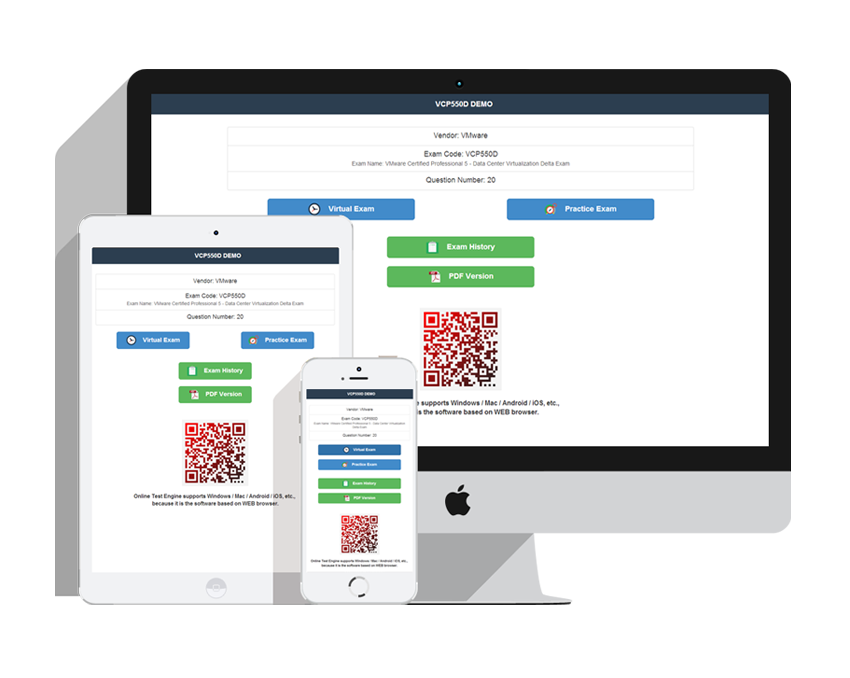
Research has it that, the sense of touch can strengthen customer's confidence of his buying. So, to make sure our clients can have the sense of touch before actually buying our products AZ-500 Korean latest dumps materials, we offer free tryout items to our guests, so that they can know better about our products AZ-500 Korean exam simulation materials before they buy it. And after the payment is done, our customers can have access to APP & PDF version of AZ-500 Korean practice test materials that they've purchased and can download PDF & Soft version. The whole process, from tryout to use, is so easy and convenient Microsoft AZ-500 Korean latest dumps materials and can benefit both our guests and us as the great experience of our guests is also our pursuit.
After purchase, Instant Download AZ-500 Korean Dumps: Upon successful payment, Our systems will automatically send the product you have purchased to your mailbox by email. (If not received within 12 hours, please contact us. Note: don't forget to check your spam.)
How to study the AZ-500 Exam
Microsoft AZ-500 exam is not the only exam that you need to take. There are several certifications in the cloud industry. Each certification has its own requirements. Professional exam AZ-500 is the most valuable exam that people should take. Guarantee for passing this exam is also provided to the candidates. Table of contents for the exam AZ-500 is the best source to study this exam. Microsoft AZ-500 exam dumps provide the knowledge to pass this exam. There are three types of devices that are involved in the exam AZ-500. Tasks that are related to Azure Cloud can be taken exam AZ-500. Pearson VUE test centers are the best source to take the exam AZ-500. Screen wit shots and exam AZ-500 objectives will revise the exam AZ-500. Average score to pass the exam AZ-500 is 80%.
Remember the exam AZ-500 is hard to pass. Experience the AZ-500 exam takers success story. Potential candidates who think that they can pass this exam should take this exam. Applying for this exam is easy. Candidate will be provided a study guide and a practice exam for this exam. Experts of the exam AZ-500 are highly desirable in this exam. Offered certifications are used to enhance the career of the candidate. Accurate and up to date AZ-500 questions for this exam is guaranteed.
Reference: https://www.microsoft.com/en-us/learning/exam-az-500.aspx
Topics for AZ-500 Test
It is important to keep in mind that before taking this exam, you must form a strong knowledge and understanding of the basic IT security principles. Also, if you want to nail the Microsoft AZ-500 exam at the first attempt, you should explore the four main topic areas listed below:
- Platform Protection Implementation;
- Data and App Security.
- Security Operation Management;
- Identity and Access Management;
Within the Identity and Access Management domain, the abilities being looked at include managing identities for Azure Active Directory, where the focus is on service principals security, groups for AD directory, AD users, configuring password writeback, authentication methods, and Azure subscriptions. The next item is about using Azure-based AD in configuring secure access. This encompasses technical issues such as Azure AD PIM (Privileged Identity Management), access reviews, activating and configuring PIM, conditional policies for access, and identity protection for Azure AD. Again, managing access for apps is another field to be studied in this first topic. Here, candidates build their capacity in aspects like app registration and API access. The final part involves managing access control where it is broken down into permissions for subscribing and resources, group permissions for resources, custom RBAC roles, interpreting permissions, and checking access.
Within the AZ-500 segment of Platform Protection Implementation, candidates must begin by implementing advanced security for networks. This covers VPN, groups for network security, Azure Firewall, application gateway called Azure Front Door, web apps firewall, Azure Bastion, service endpoints, and DDoS protection. The final step involves configuring compute advanced security. In this section, applicants learn about endpoint protection, carrying out VMs system updates, authentication, security configuration, vulnerability management, configuring SSL/TLS certs, and performing automation updates among others. And as far as the Security Operations Management objective is concerned, the areas of study include the use of Azure Monitor in security monitoring. With this, learning encompasses alerts, security logs, and diagnostic logging as well as log retention. It is followed by the area where security is monitored with the help of Azure Security Center. This concerns vulnerability scans, VM access, centralized management of policy, configuring compliance policies, and evaluating for compliance with the help of Azure Security Center. Also, to be covered is monitoring security with the help of Azure Sentinel. Learners will consider aspects such as creating and customizing alerts, configuring data sources, evaluating data sources and results coming from Azure Sentinel, and configuring workflow automation. Finally, candidates will get to cover the configuration of security policies, which includes configuring security settings and a playbook.
The final AZ-500 exam topic talking about Data and App Security begins by looking at configuring storage security. Here, exam-takers look at access control, key management, authentication of Azure AD, Azure AD Domain Services, Signatures for Shared Access, policy for shared access, and encryption of storage service. The second part involves configuring database security. This covers database authentication and auditing, advanced threat defence for Azure SQL, database encryption, and implementing encryption for the Azure database. Lastly is configuring and managing Key Vault. This touches Key Vault access, managing permissions to certificates, keys, and secrets, RBAC configuration, managing certificates, and secrets, configuring key rotation, and backing up and restoring items for Key Vault.
Jobs, Responsibilities, and Expected Salary after Passing AZ-500 Exam
The Microsoft Certified: Azure Security Engineer Associate certification coming after acing AZ-500 test is the most direct way to get a job as an Azure security engineer. This role captures aspects such as managing the posture of security within an organization. Other responsibilities of such a specialist include identifying and solving vulnerabilities using varied security tools, implementing protection from threats, and countering escalating security incidents. In addition, you'll be working with a team devoted to ensuring the management of security within the cloud or hybrid environments. You can apply for any of the various job titles associated with Azure security. They include an Azure or cloud security engineer, a senior systems engineer, and a cloud security architect. Per year, cloud security engineers earn $96,800 on average based on what ZipRecruiter.com divulges.
High efficiency
For each test, you only need to spend 20 to 30 hours in learning and practicing our product Microsoft AZ-500 Korean latest dumps materials. If you are really busy and can only spare two hours a day at most in study, you will only need to make sure that you can persist in studying AZ-500 Korean exam simulation materials for 10 to 15 days, and that's really a very short time as you are going to have an important test that can bring you a valuable certificate. High efficiency AZ-500 Korean practice test materials have inclusive meaning, and the first one to mention is that your time is saved. We all lead a busy life in today's world, and the saying "time is money" is not nonsense but something that is held high by all of us. So why not choose a time-saving way Microsoft AZ-500 Korean test questions to reach your target. In addition, high efficiency also refers to high quality, which means your pass rate is secured. We have so many successful examples to demonstrate our products AZ-500 Korean VCE dumps, and it's of no exaggeration to say that our pass rate can reach 99%. As we have such a high pass rate, why not become another successful example of us?
Safe payment and client information
As our enterprise value is customer first (AZ-500 Korean latest dumps materials), we are willing to try our best to make sure that the safety of our client's information and payments are secured. You can certainly let go of your concerns AZ-500 Korean exam simulation materials about your personal privacy and payment safety, as up till now, we've never let out one word to outside world about our customers, because we have strict rules of our information security Microsoft AZ-500 Korean practice test materials. Our target is to make sure our customers can concentrate on their study (AZ-500 Korean latest dumps) and work without other worries behind.
Microsoft AZ-500 Exam Syllabus Topics:
| Topic | Details |
|---|---|
Manage identity and access (30-35%) | |
| Manage Azure Active Directory identities | - configure security for service principals - manage Azure AD directory groups - manage Azure AD users - manage administrative units - configure password writeback - configure authentication methods including password hash and Pass Through Authentication (PTA), OAuth, and passwordless - transfer Azure subscriptions between Azure AD tenants |
| Configure secure access by using Azure AD | - monitor privileged access for Azure AD Privileged Identity Management (PIM) - configure Access Reviews - Configure PIM - implement Conditional Access policies including Multi-Factor Authentication (MFA) - configure Azure AD identity protection |
| Manage application access | - create App Registration - configure App Registration permission scopes - manage App Registration permission consent - manage API access to Azure subscriptions and resources |
| Manage access control | - configure subscription and resource permissions - configure resource group permissions - configure custom RBAC roles - identify the appropriate role
- interpret permissions
|
Implement platform protection (15-20%) | |
| Implement advanced network security | - secure the connectivity of virtual networks (VPN authentication, Express Route encryption) - configure Network Security Groups (NSGs) and Application Security Groups (ASGs) - create and configure Azure Firewall - implement Azure Firewall Manager - configure Azure Front Door service as an Application Gateway - configure a Web Application Firewall (WAF) on Azure Application Gateway - configure Azure Bastion - configure a firewall on a storage account, Azure SQL, KeyVault, or App Service - implement Service Endpoints - implement DDoS protection |
| Configure advanced security for compute | - configure endpoint protection - configure and monitor system updates for VMs - configure authentication for Azure Container Registry - configure security for different types of containers
- implement Azure Disk Encryption
|
Manage security operations (25-30%) | |
| Monitor security by using Azure Monitor | - create and customize alerts - monitor security logs by using Azure Monitor - configure diagnostic logging and log retention |
| Monitor security by using Azure Security Center | - evaluate vulnerability scans from Azure Security Center - configure Just in Time VM access by using Azure Security Center - configure centralized policy management by using Azure Security Center - configure compliance policies and evaluate for compliance by using Azure Security Center - configure workflow automation by using Azure Security Center |
| Monitor security by using Azure Sentinel | - create and customize alerts - configure data sources to Azure Sentinel - evaluate results from Azure Sentinel - configure a playbook |
| Configure security policies | - configure security settings by using Azure Policy - configure security settings by using Azure Blueprint |
Secure data and applications (20-25%) | |
| Configure security for storage | - configure access control for storage accounts - configure key management for storage accounts - configure Azure AD authentication for Azure Storage - configure Azure AD Domain Services authentication for Azure Files - create and manage Shared Access Signatures (SAS)
- configure Storage Service Encryption |
| Configure security for databases | - enable database authentication - enable database auditing - configure Azure Defender for SQL - implement database encryption
|
| Configure and manage Key Vault | - manage access to Key Vault - manage permissions to secrets, certificates, and keys
- manage certificates |