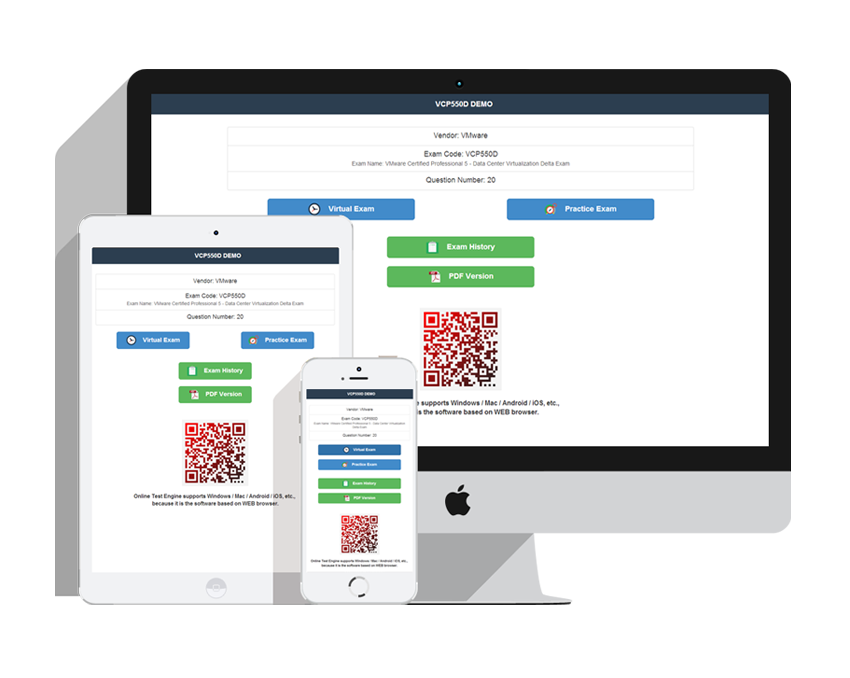
Free Demo


Safe payment and client information
As our enterprise value is customer first (CWNA-108 latest dumps materials), we are willing to try our best to make sure that the safety of our client's information and payments are secured. You can certainly let go of your concerns CWNA-108 exam simulation materials about your personal privacy and payment safety, as up till now, we've never let out one word to outside world about our customers, because we have strict rules of our information security CWNP CWNA-108 practice test materials. Our target is to make sure our customers can concentrate on their study (CWNA-108 latest dumps) and work without other worries behind.
CWNP CWNA-108 Exam Topics:
| Section | Weight | Objectives |
|---|---|---|
| WLAN Protocols and Devices | 20% | 1. Describe the components and functions that make up an 802.11 wireless service set
2. Define terminology related to the 802.11 MAC and PHY
3. Identify and explain the MAC frame format
4. Identify and explain the purpose of the three main 802.11 frame types
5. Explain the process used to locate and connect to a WLAN
6. Explain 802.11 channel access methods
7. Explain 802.11 MAC operations
8. Describe features of, select, and install WLAN devices, control, and management systems
|
| WLAN Troubleshooting | 10% | 1. Describe and apply common troubleshooting tools used in WLANs
2. Identify and troubleshoot common wireless issues
|
| WLAN Network Architecture and Design Concepts | 15% | 1. Describe and implement Power over Ethernet (PoE) 802.3af, 802.3at, 802.3bt
2. Define and describe differences, advantages and constraints of the different wireless LAN architectures
3. Describe design considerations for common deployment scenarios in wireless such as coverage requirements, roaming considerations, throughput, capacity and security
4.Demonstrate awareness of common proprietary features in wireless networks.
5. Determine and configure required network services supporting the wireless network
|
| WLAN Network Security | 10% | 1. Identify weak security options that should not be used in enterprise WLANs
2. Identify and configure effective security mechanisms for enterprise WLANs
3. Understand basic concepts of WPA3 and Opportunistic Wireless Encryption (OWE) and enhancements compared to WPA2
4. Describe common security options and tools used in wireless networks
|
| Radio Frequency (RF) Technologies | 15% | 1. Define and explain the basic characteristics of RF and RF behavior
2. Apply the basic concepts of RF mathematics and measurement
3. Identify RF signal characteristics as they relate to antennas.
4. Explain and apply the functionality of RF antennas, antenna systems, and accessories available
|
| WLAN Regulations and Standards | 20% | 1. Explain the roles of WLAN and networking industry organizations
2. Explain and apply the various Physical Layer (PHY) solutions of the IEEE 802.11-2016 standard as amended including supported channel widths, spatial streams, data rates.
3. Understand spread spectrum technologies, Modulation and Coding Schemes (MCS)
4. Identify and apply 802.11 WLAN functional concepts
5. Describe the OSI model layers affected by the 802.11-2016 standard and amendments 6. Identify and comply with regulatory domain requirements and constraints (specifically in 2.4 GHz and 5 GHz)
7. Explain basic use case scenarios for 802.11 wireless networks
|
| RF Validation | 10% | 1. Verify and document that design requirements are met including coverage, throughput, roaming, and connectivity with a post-implementation validation survey 2. Locate and identify sources of RF interference
3. Perform application testing to validate WLAN performance
4. Understand and use the basic features of validation tools
|
High efficiency
For each test, you only need to spend 20 to 30 hours in learning and practicing our product CWNP CWNA-108 latest dumps materials. If you are really busy and can only spare two hours a day at most in study, you will only need to make sure that you can persist in studying CWNA-108 exam simulation materials for 10 to 15 days, and that's really a very short time as you are going to have an important test that can bring you a valuable certificate. High efficiency CWNA-108 practice test materials have inclusive meaning, and the first one to mention is that your time is saved. We all lead a busy life in today's world, and the saying "time is money" is not nonsense but something that is held high by all of us. So why not choose a time-saving way CWNP CWNA-108 test questions to reach your target. In addition, high efficiency also refers to high quality, which means your pass rate is secured. We have so many successful examples to demonstrate our products CWNA-108 VCE dumps, and it's of no exaggeration to say that our pass rate can reach 99%. As we have such a high pass rate, why not become another successful example of us?
Understanding functional and technical aspects of CWNA® - Certified Wireless Network Administrator Business Principles and Practices
The following will be discussed in CWNP CWNA-108 exam dumps:
- Identify and explain the purpose of the three main 802.11 frame types
- SSID
- MSDU, MPDU, PSDU, and PPDU
- Data
- Access Control Lists for segmentation
- Explain 802.11 MAC operations
- Interframe spaces (SIFS, DIFS, EIFS, AIFS)
- Wired network capacity requirements
- Describe the components and functions that make up an 802.11 wireless service set
- VLANs for segmentation
- MAC frame format
- NAV
- Describe design considerations for common deployment scenarios in wireless such as coverage requirements, roaming considerations, throughput, capacity and security
- Client devices
- Connecting to hidden SSIDs
- Open System Authentication and Shared Key authentication
- CTS-to-Self
- Dynamic power and channel management features
- Design considerations for location services including Real-Time Location Services (RTLS)
- Physical carrier sense and virtual carrier sense
- MAC addressing
- Hidden node
- Roaming
- Protection mechanisms
- Control
- DNS for address resolution for clients and APs
- A-MSDU and A-MPDU
- Determine and configure required network services supporting the wireless network
- Wireless bridge and mesh APs
- Association
- Authentication services (e.g. RADIUS, LDAP)
- WLAN controllers
- Basic Service Set (BSS) (Infrastructure mode)
- Describe features of, select, and install WLAN devices, control, and management systems
- Design considerations for video
- AirTime Fairness
- Scanning (active and passive)
- Access Points (APs)
- Design considerations for supporting legacy 802.11 devices
- Extended Service Set (ESS)
- Distribution System Media (DSM)
- Time synchronization protocols (e.g. NTP, SNTP)
- Wireless network management systems
- Demonstrate awareness of common proprietary features in wireless networks
- Design considerations for guest access/BYOD
- RTS/CTS
- Identify and explain the MAC frame format
- Power save modes and frame buffering
- Explain the process used to locate and connect to a WLAN
- Capacity planning for high and very high-density environments
- Explain 802.11 channel access methods
- DCF
- Band steering
- Management
- BSSID
- Stations (STAs)
- Design considerations for data
- Design considerations for voice
- BSS selection
- IBSS (Ad-Hoc)
- Connecting to 802.1X/EAP and Pre-Shared Key authentication networks
- Define terminology related to the 802.11 MAC and PHY
- EDCA
- DHCP for client addressing, AP addressing and/or controller discovery
- Design considerations for highly mobile devices (e.g. tablets and smartphones)
- PHY preamble and header
- Authentication
- Distribution System (DS)
Reference: https://www.cwnp.com/certifications/cwna
Domain Details for CWNP CWNA-108
When it comes to particulars of this test, they are as follows:
- RF Technologies
In particular, RF or Radio Frequency technologies concern the defining and explaining of basic features of RF in addition to RF behavior. Under this category, one will be learning about wavelength, frequency, phase, amplitude, sine waves, RF propagation & coverage, reflection, refraction, scattering, and diffraction, multipath as well as RF interference, gain & loss, amplification, absorption, and more. Also, to be learned is the application of fundamental concepts relating to RF measurements and mathematics. This details watt & milliwatt, decibel (dB), noise floor, SNR, RSSI, EIRP, and others. The next part is focused on identifying RF signal features according to the way they relate to antennas. The areas it touches on include beamwidths, RF in addition to a physical line of sight & Fresnel zone clearance, polarization, passive gain, radio chains, spatial multiplexing (SM), and MIMO, among others. The other domain covered is centered on RF antennas, antenna-related systems, as well as accessories functionality. This covers antennas that are omni-directional, highly directional, and semi-directional. It also covers antenna orientation, lightning arrestors as well as grounding rods or wires, RF cables & connectors, and more.
- RF Validation
Under such a topic, candidates will be looking at verifying and documenting that design demands are met, including roaming, coverage, throughput, and connectivity alongside a validation survey for post-implementation. Also, to consider is the location and identification of sources associated with RF interference. Next is dealing with the performance of app testing to enable the validation of WLAN performance, which captures the network in addition to service availability, VoIP testing, throughput testing, and others. The last area to get into concerns the basic features associated with validation tools. Particularly, this explains using throughput testers in validating tasks, using validation software for wireless scanners, and using protocol analyzers to validate tasks, among other issues.
- Security for WLAN Network
Included in the topic is the matter of the identification of weak options of security that shouldn't be utilized in WLANs for the enterprise. Also, included here is the identification and configuration of efficient security mechanisms targeted at enterprise WLANs, basic concepts relating to WPA3 & Opportunistic Wireless Encryption (OWE) as well as enhancements in comparison with WPA2, and common options of security as well as tools used within wireless based networks.
- WLAN Network Infrastructure & Design Concepts
This section is about the implementation of Power over Ethernet (PoE), the advantages, constraints, and differences of various infrastructures for WLAN, design considerations related to common deployments within wireless that include coverage needs, roaming considerations, capacity, security, throughput, and awareness on common proprietary elements relating to wireless networks. Another field is about considering and configuring the needed services for networks that are supporting wireless ones.
- WLAN Troubleshooting
This part covers common tools for troubleshooting that are often used within WLANs. Issues addressed by such a topic revolve around the usage of protocol analyzers to troubleshoot tasks, the usage of spectrum analyzers in identifying interference sources, and more. The last area looks at the identification and troubleshooting of wireless problems.
- WLAN Protocols & Devices
This sector touches on the elements as well as functions that constitute an 802.11 wireless service set, terminology that relates to 802.11 MAC & PHY, MAC frame design, and the purpose of the three major frame types of 802.11. Also, it scrutinizes the process followed when locating and connecting to WLANs, access techniques for 802.11 channel, 802.11 MAC functioning, and the features, selection, and installation of WLAN gadgets, control, and the management of systems.
- Standards & Regulations for WLAN
This tested area includes the roles played by WLAN as well as networking industry companies, the application of differing PHY (Physical Layer) solutions aimed at IEEE 802.11-2016 standard based on the amendment that includes supported widths, spatial streams, and data rate for a channel, and technologies and Modulation & Coding Schemes (MCS) related to spread spectrum. Also, such a domain deliberates OSI layers impacted by 802.11-2016 amendment and standard, the application of WLAN operation concepts for 802.11, and basic scenarios targeting 802.11 wireless networks.
CWNP CWNA-108 Exam Certification Details:
| Sample Questions | CWNP CWNA-108 Sample Questions |
| Exam Registration | PEARSON VUE |
| Number of Questions | 60 |
| Duration | 90 minutes |
| Recommended Training | Official CWNA Certification Self Study Kit Live Training Wireless Network Certification Class |
| Exam Price | $225 USD |
| Passing Score | 70% |
| Exam Code | CWNA-108 CWNA |
| Exam Name | Wireless Network Administrator |
Free experience
Research has it that, the sense of touch can strengthen customer's confidence of his buying. So, to make sure our clients can have the sense of touch before actually buying our products CWNA-108 latest dumps materials, we offer free tryout items to our guests, so that they can know better about our products CWNA-108 exam simulation materials before they buy it. And after the payment is done, our customers can have access to APP & PDF version of CWNA-108 practice test materials that they've purchased and can download PDF & Soft version. The whole process, from tryout to use, is so easy and convenient CWNP CWNA-108 latest dumps materials and can benefit both our guests and us as the great experience of our guests is also our pursuit.
After purchase, Instant Download CWNA-108 Dumps: Upon successful payment, Our systems will automatically send the product you have purchased to your mailbox by email. (If not received within 12 hours, please contact us. Note: don't forget to check your spam.)
What's the definition of good CWNP CWNA-108 latest dumps materials? Well, firstly we need to know that exam materials is to be used by people, so the only standard to measure a product is whether CWNA-108 exam simulation materials can satisfy people. Our CWNA-108 practice test questions aim to make our customers have fantastic user experience.